

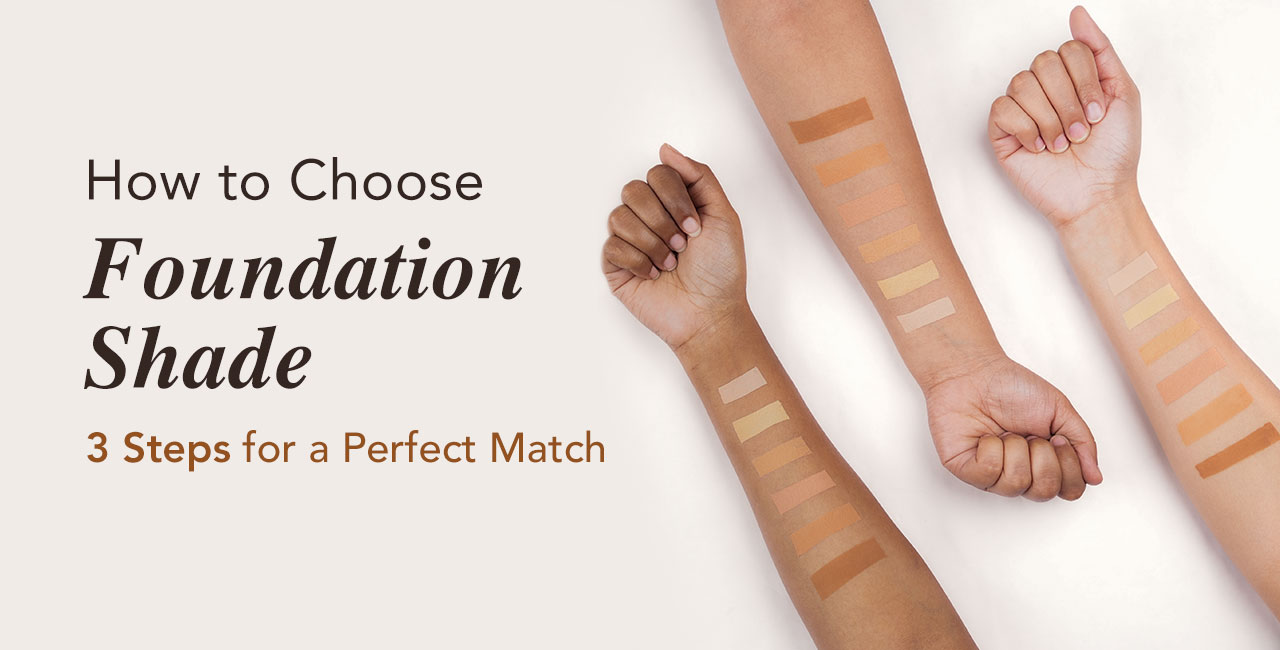
How to Choose Foundation Shade: 3 Steps for a Perfect Match
Now let’s understand why most of us get foundation matching wrong and how to get it right.
We’ve all been there. You buy a foundation online because the colour in the bottle looks perfect, or a shop assistant picks one for you in 30 seconds under bright store lights. Then you step outside and your face looks a shade lighter than your neck. Or worse, slightly orange.
Nobody wants that, especially on a wedding day or during an important meeting.
The good news is that learning how to choose foundation shade isn’t complicated. It just takes a little patience and the right method. Let’s break it down.
Why Is It So Hard to Find the Right Foundation Shade?
Foundation shade names can be confusing. One brand’s “Natural Beige” can look completely different from another brand’s “Natural Beige.”
On top of that, Indian skin tones are incredibly diverse. Even within the same family, you can find fair, wheatish, medium, and deep skin tones, each with a different undertone.
Another common mistake is matching foundation only to your face. Your face gets more sun exposure and can have more redness and pigmentation than your neck and chest. So, if you choose a foundation based only on your cheeks, you can easily end up with a shade that looks too dark or too warm.
What Is Undertone and Why Does It Matter?
Your skin tone is how light or deep your skin looks on the surface. Your undertone is the subtle colour underneath your skin,
and it usually stays the same even when you tan.
There are three main undertones:
- Warm: Yellow, golden, or peachy
- Cool: Pink, red, or bluish
- Neutral: A mix of warm and cool, without a strong lean either way
Two people can have the same skin depth but completely different undertones. That’s why a “medium” foundation shade can look perfect on your friend but appear ashy or dull on you.
3 Easy Ways to Check Your Undertone at Home
1. The Vein Test
Look at the inside of your wrist in natural light. If your veins look greenish, you may have a warm undertone. Blue or purple veins usually indicate a cool undertone. If you can’t clearly tell, you may have a neutral undertone.
2. The Jewellery Test
If gold jewellery makes your skin look brighter, you may have a warm undertone. If silver looks better, you may have a cool undertone. If both look equally good, you may have a neutral undertone.
3. The White Cloth Test
Hold a plain white cloth close to your bare face. If your skin looks more yellow or golden next to it, you may lean warm. If it looks rosy or pink, you may lean cool.
Warm and neutral undertones are common among Indian skin tones, but don’t rely only on assumptions. Always test your skin before choosing a shade.
How to Choose Foundation Shade in 3 Simple Steps
This is the method we teach our students. Whether you’re choosing a foundation for yourself or matching a client’s shade, it’s a simple way to get a more accurate match.
Step 1: Pick 2–3 Shades, Not Just One
Never test just one shade.
Choose one shade that looks close to your skin, one slightly lighter, and one slightly deeper. Comparing all three makes it much easier to see which one actually disappears into your skin.
Step 2: Swatch on Your Jawline, Not Your Hand
Your hand is usually a different colour from your face, so testing foundation there isn’t very accurate.
Apply three thin stripes along your jawline, right where your face meets your neck. This area makes any shade mismatch much easier to spot.
Step 3: Check in Daylight After 10 Minutes
This is the step most people skip.
Foundation can become slightly darker as it dries and reacts with air and your skin’s natural oils. So let the foundation sit for around 10 minutes before making a final decision.
Then move near a window or step outside and check the shades in natural daylight.
The shade that blends naturally into your jawline and neck without leaving a visible line is usually your best match.
Foundation Shade Guide by Skin Tone and Undertone
Use this as a starting point when shopping. Keep in mind that shade names and numbering can vary from one brand to another.
| Your Skin | Undertone | Look for shades described as |
| Fair | Cool | Porcelain, ivory, rose beige |
| Fair | Warm | Light beige, warm ivory, sand |
| Medium (wheatish) | Neutral | Natural beige, warm beige, honey |
| Medium to tan | Warm | Golden, caramel, warm sand |
| Deep | Cool | Cool mocha, espresso, deep rose |
| Deep | Warm | Chestnut, warm cocoa, deep golden |
Common Mistakes That Ruin Your Foundation Shade
- Testing under store lights: Store lighting can be warm or overly bright, making it difficult to see the real shade. Ask to check the foundation near the entrance or in natural daylight.
- Matching your tan: Your skin can become darker after spending more time in the sun. Many makeup artists keep two shades and mix them as the seasons change.
- Ignoring your neck: Your face and neck should look like they belong together. Always blend a little foundation down towards your neck.
- Choosing based on the bottle: Foundation can look very different once it is applied to your skin.
- Choosing a lighter shade to look fairer: A foundation that is too light can make your face look greyish and become even more obvious in flash photography.
Does Foundation Type Affect the Shade You Choose?
A little, yes.
Sheer and dewy foundations allow more of your natural skin to show through, so getting an accurate shade match is especially important.
Full-coverage and matte foundations can hide small mismatches, but some formulas can also oxidise more as they settle. That’s why it’s important to give the foundation some time before deciding on the shade.
If you’re choosing a foundation for a photoshoot or wedding, it can help to keep the shade closer to your neck than your face, since cameras and lighting can make skin appear brighter.
Airbrush makeup is slightly different because the product is applied as a fine mist and blends differently on the skin. If you want to learn more, our Certificate in Airbrush Artistry covers how shade matching works with airbrush systems.
How Makeup Artists Find the Perfect Foundation Shade for Clients?
Professional makeup artists usually don’t depend on just one foundation shade for every client. When working with real clients, they often:
- Mix two shades to create an exact match
- Use a slightly deeper foundation shade for the neck and body
- Add a yellow or red-toned colour adjuster to correct the undertone
- Check the match in both daylight and indoor lighting before starting the makeup
This becomes even more important for bridal makeup because the foundation needs to look right in photographs, videos, and flash photography.
These practical shade-matching skills are an important part of what we teach in our Certificate in Bridal Artistry and Comprehensive Make-Up Artistry (CMA) programme.
Students practise on different skin tones so they can confidently match a real client instead of simply guessing.
If you want to turn makeup into a career, our guide on how to become a makeup artist in India can also help you understand where to start.
Quick Checklist Before You Buy
- I know my undertone: warm, cool, or neutral
- I tested at least 2–3 shades
- I swatched the foundation on my jawline, not my hand
- I waited 10 minutes to check for oxidation
- I checked the shade in natural daylight
- My face, neck, and chest look like they belong to the same colour family
If you can tick all six, you’ve already avoided many of the common mistakes people make when choosing foundation.
Final Thoughts
Finding the right foundation shade may take a little extra effort at first, but it can save you time, money, and a lot of trial and error.
Understand your undertone, test more than one shade, swatch along your jawline, and always check the final match in natural daylight. Follow these basic steps and choosing the right foundation shade becomes much easier.
And if you enjoy learning the details behind makeup and want to turn it into a profession, explore the courses at Makeup Studio Training Centre. You can visit our Delhi centre or Kolkata centre, read more on our blog, or contact us to book a visit.
Frequently Asked Questions
How do I choose foundation shade for Indian skin?
Start by identifying your undertone. Warm and neutral undertones are common among Indian skin tones, so golden, honey, or warm beige shades can be a useful starting point. Then swatch two or three shades along your jawline and check them in natural daylight after about 10 minutes.
How do I find foundation shade online without testing?
Look for brands that offer shade finders or detailed swatches on different skin tones. If you already own a foundation that matches you well, use its shade as a reference when comparing other brands.
If possible, shop from a store that allows returns. If samples are available, trying a sample before buying the full-size product can also help.
Should foundation match my face or my neck?
Match the foundation along your jawline, where your face meets your neck. This helps the foundation blend naturally into both areas and prevents a visible line.
Why does my foundation look darker after an hour?
This can happen because of oxidation. Foundation can react with air and your skin’s natural oils and become slightly deeper in colour. That’s why it’s useful to wait around 10 minutes before deciding if the shade is right.
Can I use one foundation shade all year?
Not necessarily. Your skin can become darker after summer because of tanning and may look lighter during winter. Some people keep two foundation shades and mix them depending on the season.
What if I’m between two shades?
You can mix both shades together. Start with the lighter shade and gradually add the deeper shade until the mixture blends naturally into your skin.

Sorry, the comment form is closed at this time.